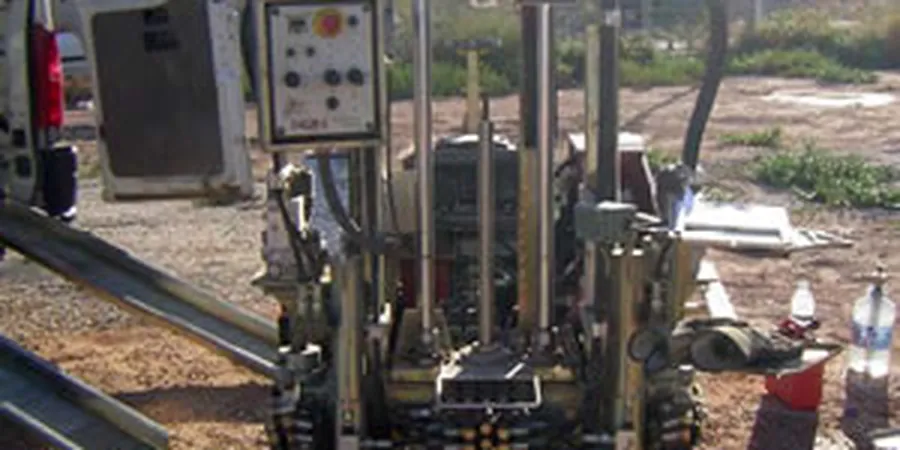
Our cone penetrometer rig pushes a 35.7 mm diameter cone into Bendigo subsoils at a steady 20 mm/s. The system records tip resistance, sleeve friction and pore pressure every 10 mm. This continuous data stream gives a near-instantaneous soil log from surface to refusal depth. We operate in Bendigo with a 20-tonne reaction rig that handles the region's dense gravel layers and stiff clays typical of the Box Creek floodplain. The CPT method avoids borehole cuttings and sample transport, so results are available the same day. Before mobilising we check access constraints, especially on Bendigo's narrow heritage streetscapes. Combining the CPT trace with a georradar survey can help identify buried services in developed zones.
The CPT provides a continuous soil log at 10 mm intervals, capturing tip resistance, friction ratio and pore pressure in a single push.
Method and coverage
Bendigo's climate swings from dry summers to wet winters, which affects soil moisture and cone resistance readings. We correct all raw CPT data for pore pressure effects using the net area ratio of the cone. The standard 10 cm² cone measures three channels in real time. In sandy lenses near the Bendigo Creek, the piezocone captures dissipation tests every 1.5 m to estimate hydraulic conductivity. For deep profiles we use a seismic cone that also measures shear wave velocity. This data ties directly to the MASW Vs30 survey for site classification under AS 1170.4. The results feed into bearing capacity calculations, settlement estimates and liquefaction screening. All equipment is calibrated annually to ISO 17025 standards.
Technical reference image — Bendigo
Regional considerations
Bendigo sits on Paleozoic bedrock overlain by deep alluvial and colluvial deposits. The water table fluctuates between 3 m and 12 m depending on the season and proximity to the Bendigo Creek. In gold-mining zones, old workings can cause sudden cone refusal or lateral deviation of the rod string. We pre-screen historical mine shaft records before each test location. Loose sand layers in the Epsom area present liquefaction risk under seismic loading. The CPT data allows us to calculate the cyclic resistance ratio (CRR) directly using the Robertson and Wride method. This is critical for residential subdivisions on the northern plains of Bendigo.
Full piezocone profile with tip resistance, sleeve friction and u2 pore pressure. Includes dissipation tests in clay layers. Report includes soil behaviour type (SBT) chart and corrected cone resistance (qt). Ideal for foundation design and settlement analysis in Bendigo's alluvial soils.
02
Seismic CPT (SCPTu)
Adds vs30/" data-interlink="1">shear wave velocity measurement at 1 m intervals using a down-hole geophone array inside the cone rod. Direct input for site classification per AS 1170.4. Used in Bendigo for earthquake hazard assessment and ground response analysis on soft soil sites.
03
Environmental CPT with groundwater sampling
Cone equipped with a water-sampling port and optional electrical conductivity (EC) sensor. Collects discrete groundwater samples at target depths without cross-contamination. Applied in Bendigo for contaminated land investigations on former industrial and mining allotments.
Standards that apply
AS 1726 – Geotechnical site investigations, AS 1289.6.5.1 – Standard test method for electronic friction cone and piezocone penetration testing, ISO 22476-1 – Geotechnical investigation and testing – Field testing – Part 1: Electrical cone and piezocone penetration test, AS 4678 – Earth-retaining structures
Q&A
What is the main advantage of CPT over SPT in Bendigo?
CPT gives a continuous soil profile at 10 mm intervals rather than a discrete blow count every 1.5 m. It captures thin layers of sand or clay that SPT can miss. The CPT also measures pore pressure in real time, which is critical for evaluating liquefaction potential in Bendigo's alluvial deposits.
How deep can the CPT rig push in Bendigo soils?
In typical Bendigo conditions we reach 25 m to 30 m before refusal. Dense gravel beds or old mine workings may stop the cone earlier at 8 m to 12 m. We pre-auger through very stiff crusts if needed. The rig carries 20 tonnes of reaction mass to maximise penetration.
What is the typical cost range for a CPT in Bendigo?
A standard CPTu test in Bendigo costs between AU$250 and AU$440 per test point. The final price depends on depth, number of dissipation tests and site access conditions. We provide a fixed quote after a desktop review of the site geology and access constraints.
Does the CPT method work in the gold-mining areas around Bendigo?
Yes, but we must review historical mine shaft plans before each push. Old stopes and backfilled workings can cause rod deviation or sudden refusal. We use a torque-limited cone to reduce damage risk. The CPT still gives reliable data in unmined areas and above the weathered bedrock profile.