← Home · Investigation

Exploratory Test Pit in Bendigo – Subsurface Investigation for Reliable Foundations

Together, we solve the challenges of tomorrow.

LEARN MORE →

Bendigo grew fast during the gold rush, and the city’s subsurface still carries that history. Old alluvial channels, mullock heaps, and buried workings create a complex geotechnical patchwork. We dig exploratory test pits to see what is actually there. A machine excavates a trench deep enough to expose the soil profile. Our engineer logs every layer, measures density, and collects samples on the spot. The method is simple but irreplaceable. No number from a lab can replace the confidence of looking at the ground with your own eyes. Before any foundation design in Bendigo, a test pit tells you the real story. We often pair this work with a granulometry test to classify the soil matrix and with soil classification for consistent engineering parameters.
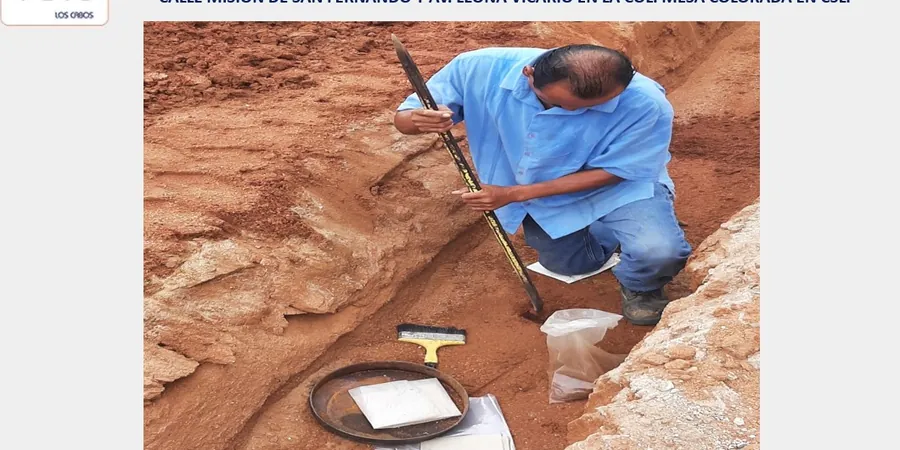
Illustrative image of Calicatas exploratorias in Bendigo
No number from a lab can replace the confidence of looking at the ground with your own eyes in Bendigo.

Methodology and scope

We follow AS 1726 for site investigation and AS 4678 for earth-retaining structures. In Bendigo, the variable nature of residual soils makes these standards essential. A test pit allows us to log the soil profile in situ, measure the depth of each horizon, and identify potential problems like old mine voids or loose fill. We also perform in-situ density tests using the sand replacement method. The key parameters we record include: The excavation is carried out by a licensed operator with a backhoe or excavator. We ensure the pit is shored if deeper than 1.5 m. The whole process takes one to two hours per pit, and we deliver a field log the same day.
Technical reference image — Bendigo

Local considerations

In Bendigo, we often see test pits that hit old mine workings less than three metres deep. That is not uncommon. The historical gold mining left a network of shafts and drives under parts of the city. If a test pit reveals a void, the foundation plan must change immediately. Another risk is encountering loose fill from reclamation of old mullock heaps. We always excavate carefully and check for methane or oxygen deficiency in confined pits. The team wears gas detectors and uses a spotter at all times. These risks are manageable, but only if you know they exist before you pour concrete.

Need a geotechnical assessment?

Reply within 24h.

Email: contact@geotechnicalengineering1.vip

Explanatory video

Technical parameters

ParameterTypical value
Excavation depth range1.5 – 4.5 m
In-situ density methodSand replacement (AS 1289.5.3.1)
Soil description standardAS 1726 – visual-manual procedure
Bulk sample mass15 – 25 kg per horizon
Field moisture contentOven-dry method (AS 1289.2.1.1)

Associated technical services

01

In-situ density testing

Sand replacement and nuclear gauge tests to verify compaction of engineered fills. Results delivered on site.

02

Bulk sampling for laboratory analysis

Collect representative samples from each soil horizon. We handle transport to our NATA-accredited lab.

03

Groundwater level monitoring

Install standpipes in test pits to measure water table fluctuations over time. Key for foundation drainage design.

04

Pit logging and digital reporting

Detailed geological logs with photos, GPS coordinates, and depth measurements. PDF report issued within 48 hours.

Applicable standards

AS 1726 – Geotechnical site investigations, AS 4678 – Earth-retaining structures, AS 1289.5.3.1 – Sand replacement method for field density

Frequently asked questions

How deep can an exploratory test pit go in Bendigo?

Typical depth ranges from 1.5 to 4.5 metres. The limit depends on groundwater, soil stability, and access. We follow AS 1726 shoring requirements for pits deeper than 1.5 m.

How much does an exploratory test pit cost in Bendigo?

Cost ranges from AU$900 to AU$1,170 per pit, including excavation, logging, and a basic field report. Prices vary with depth, number of pits, and site access conditions.

What is the difference between a test pit and a borehole?

A test pit gives you direct visual access to the soil profile. You see the layers, the moisture, and any obstructions. A borehole provides a small-diameter sample but no continuous visual log. For shallow foundations in Bendigo, test pits are often more informative.

Location and service area

We serve projects across Bendigo.

Location and service area